
Peking University
M.Sc. in Territorial Spatial Planning
GPA: 3.84 / 4.0
Shenzhen, China
Sep 2024 – Present
I am a master’s student in Territorial Spatial Planning at the School of Urban Planning and Design, Peking University, advised by Dr. Junqing Tang.
My research interests center on urban resilience, climate adaptation, and disaster risk reduction. I am particularly interested in the interactions among human activity, urban space, and disaster risk, with a focus on critical infrastructure resilience, human mobility, and adaptive responses to hazards.
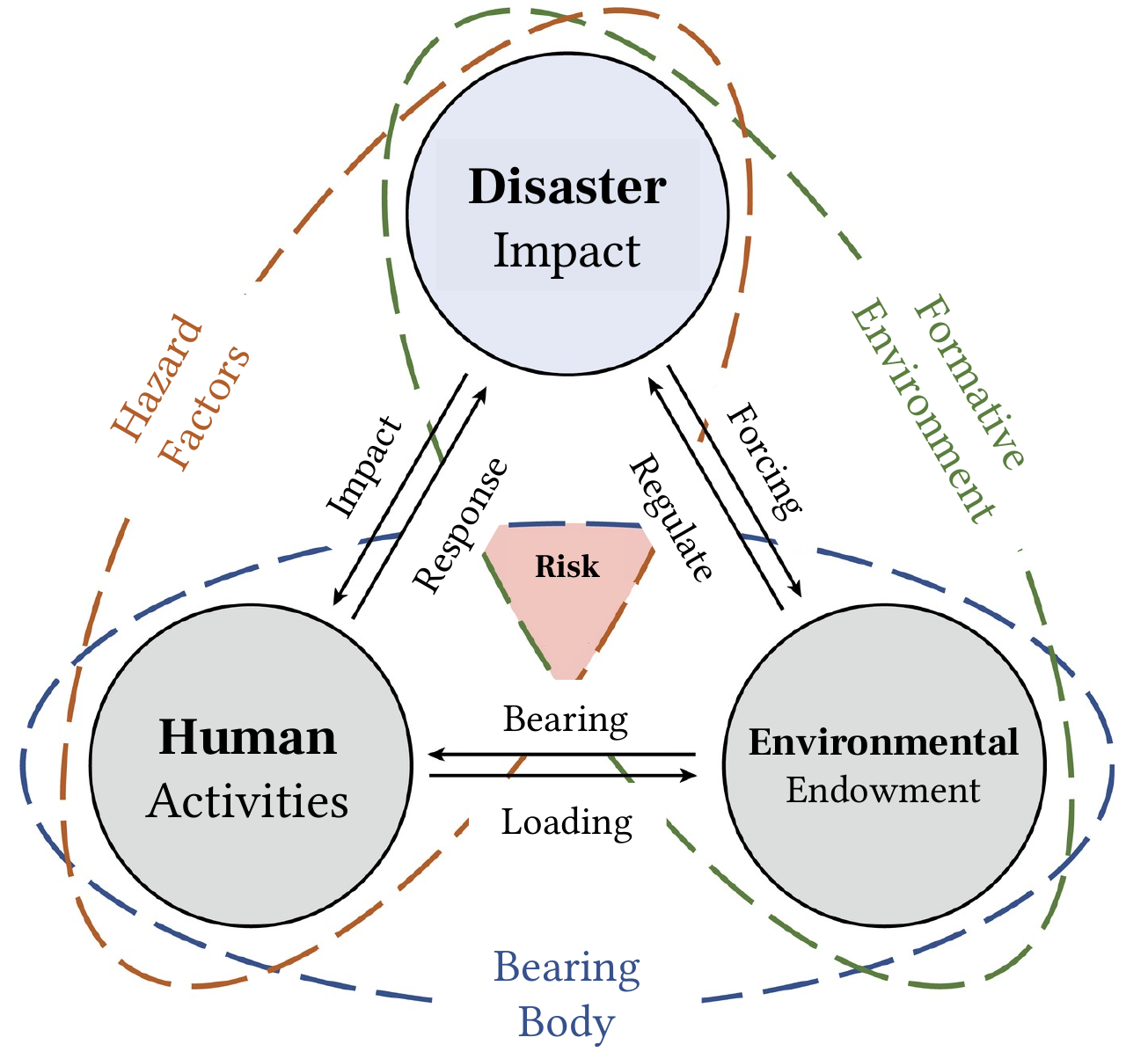
Theoretically, I propose a human–environment–disaster framework that treats disaster risk as an endogenous constraint on the evolution of human–environment systems. Methodologically, I combine physics-based hazard simulation and probabilistic risk modeling with large-scale mobility data, network analysis, and GeoAI to investigate infrastructure risk and human adaptation under climate change.
M.Sc. in Territorial Spatial Planning
GPA: 3.84 / 4.0
Shenzhen, China
Sep 2024 – Present
Sep 2020 – Jun 2024

Exchange Student in Urban Studies
GPA: 18.3 / 22.0 · First-Class
Glasgow, United Kingdom
Sep 2022 – Jun 2023
Acta Geographica Sinica · 2026 · In Chinese · Under review
In preparation
In preparation
In preparation
Journal of Transport Geography · 2026 · Major revision
Journal of Natural Disasters · 2026 · In Chinese · Minor revision
Progress in Geography · 2026 · 45(4), 683–694 · In Chinese
Nature Sustainability · 2026
Transport Policy · 2026 · 180, 104029
Journal of Geo-information Science · 2025 · 27(3), 553–569 · In Chinese
Journal of Catastrophology · 2024 · 39(4), 125–130 · In Chinese
Resilient Cities under Global Climate Change: From Principles to Applications · 2026 · Chapter 11 · Edward Elgar Publishing
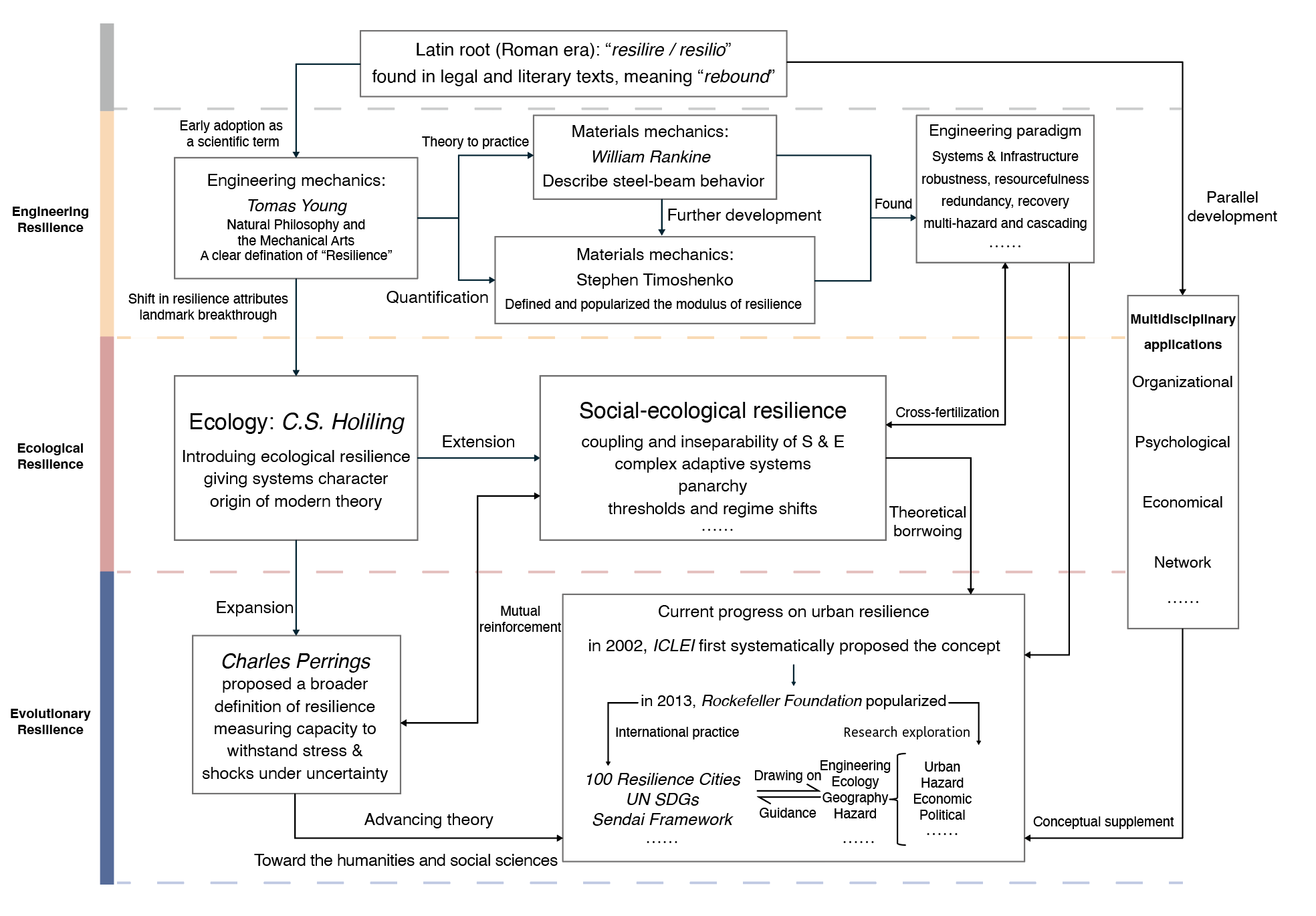
I propose a human–environment–disaster framework that treats disaster risk as an endogenous constraint on the evolution of human–environment systems. By tracing the development of resilience concepts and examining the marginal constraint effects of disaster risk, I explore the geographical foundations of urban resilience and their implications for flood governance in Zhengzhou.
From resilience to urban resilience
The human–environment–disaster framework
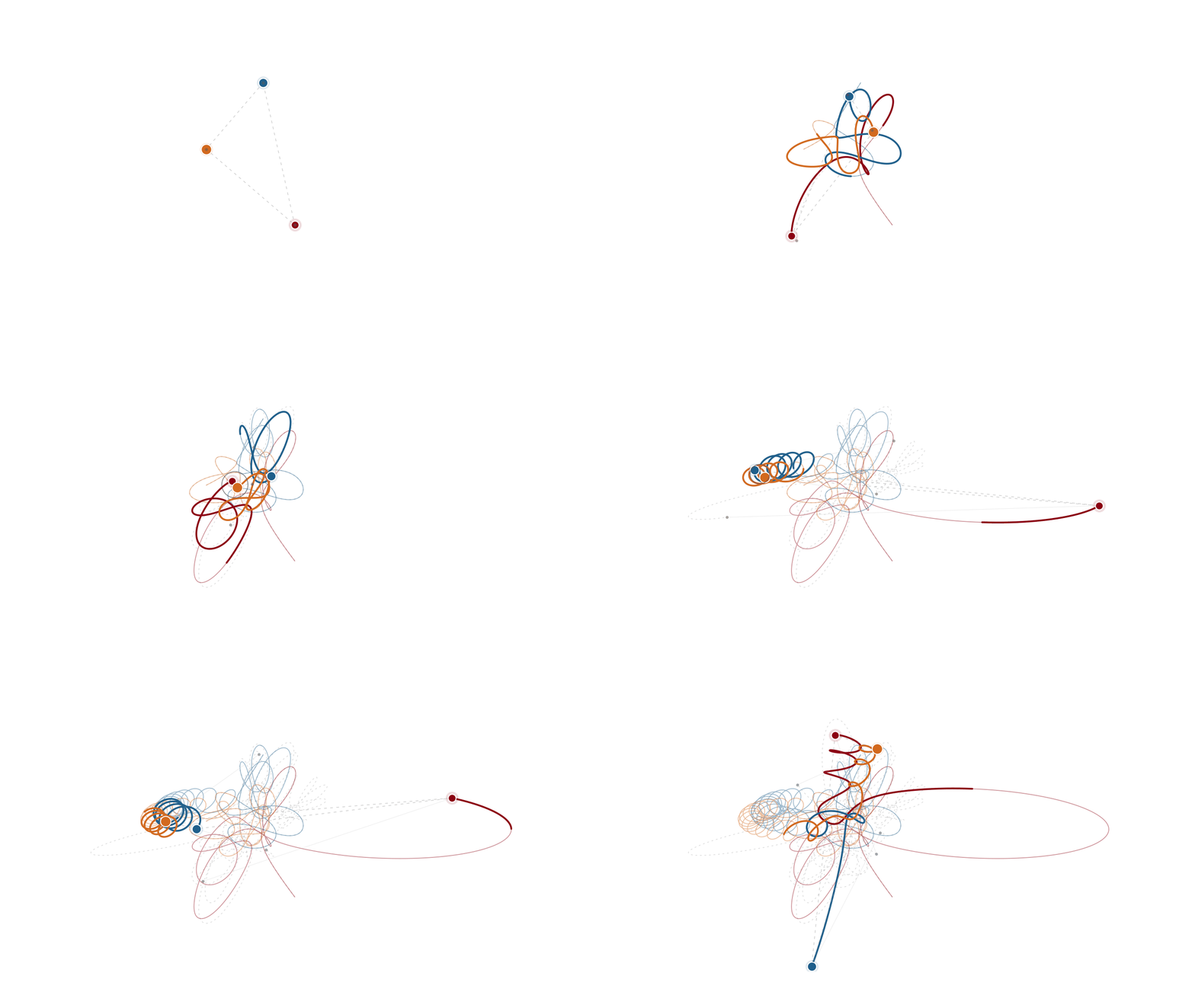
A three-body analogy for coupled systems
The complete Zhengzhou case
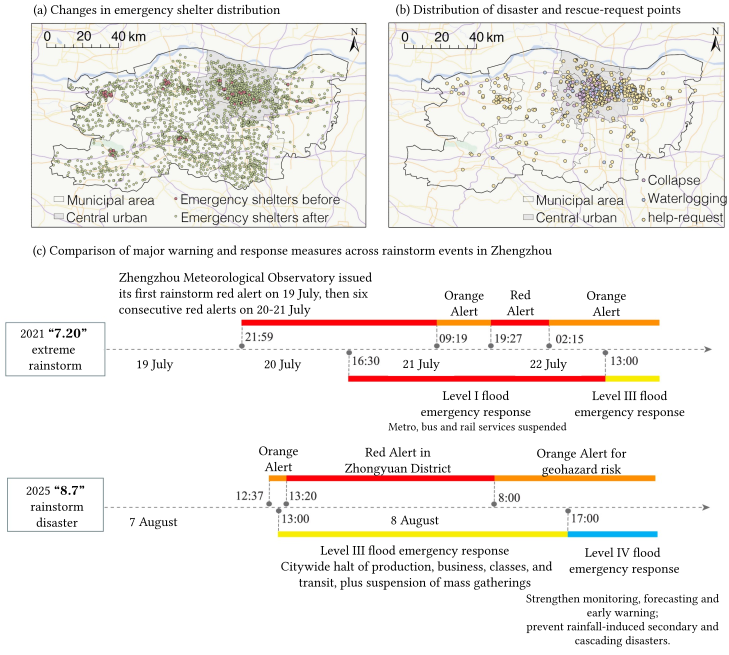
Zhengzhou shelters, disaster locations and help requests
Warnings and emergency responses in 2021 and 2025
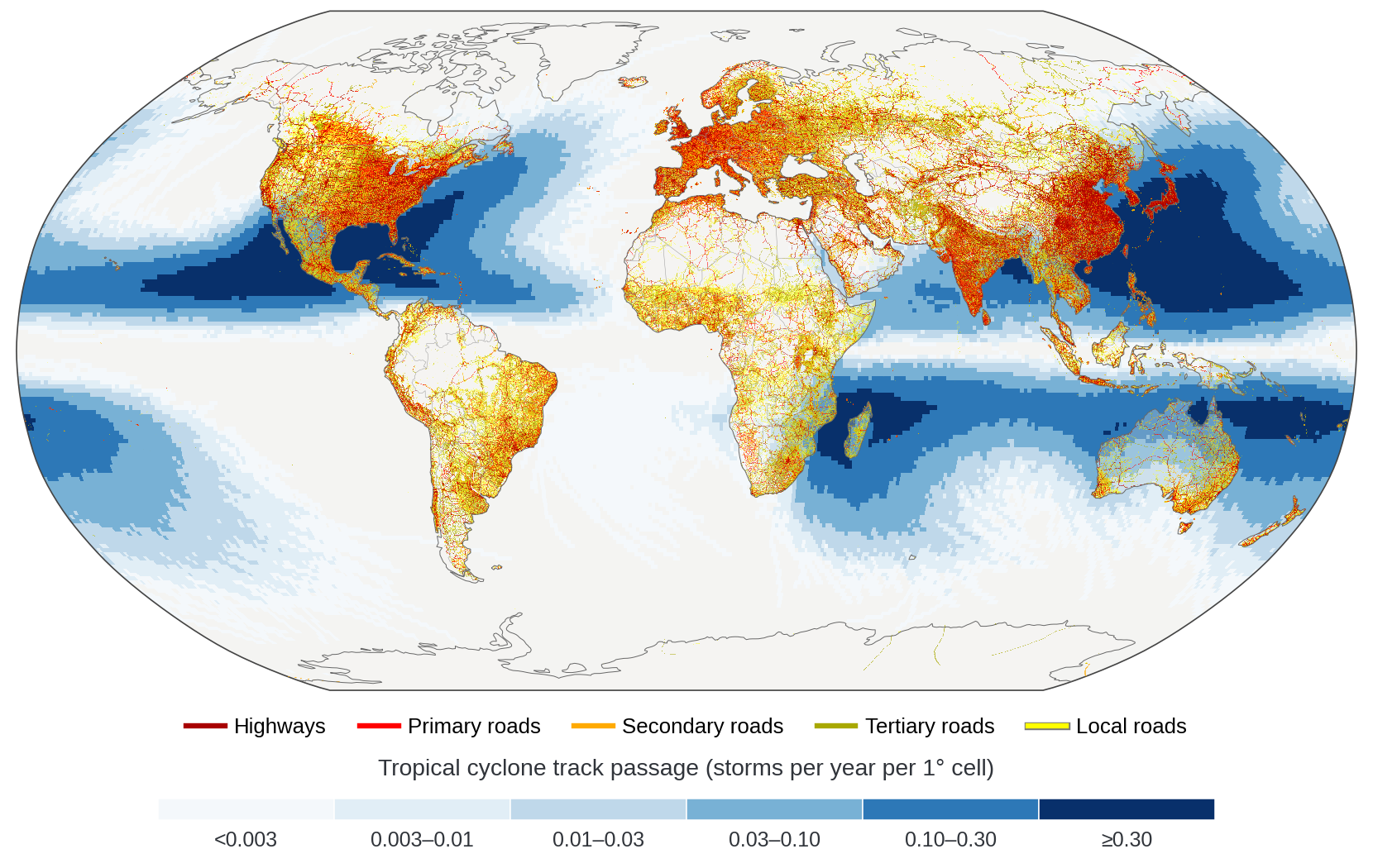
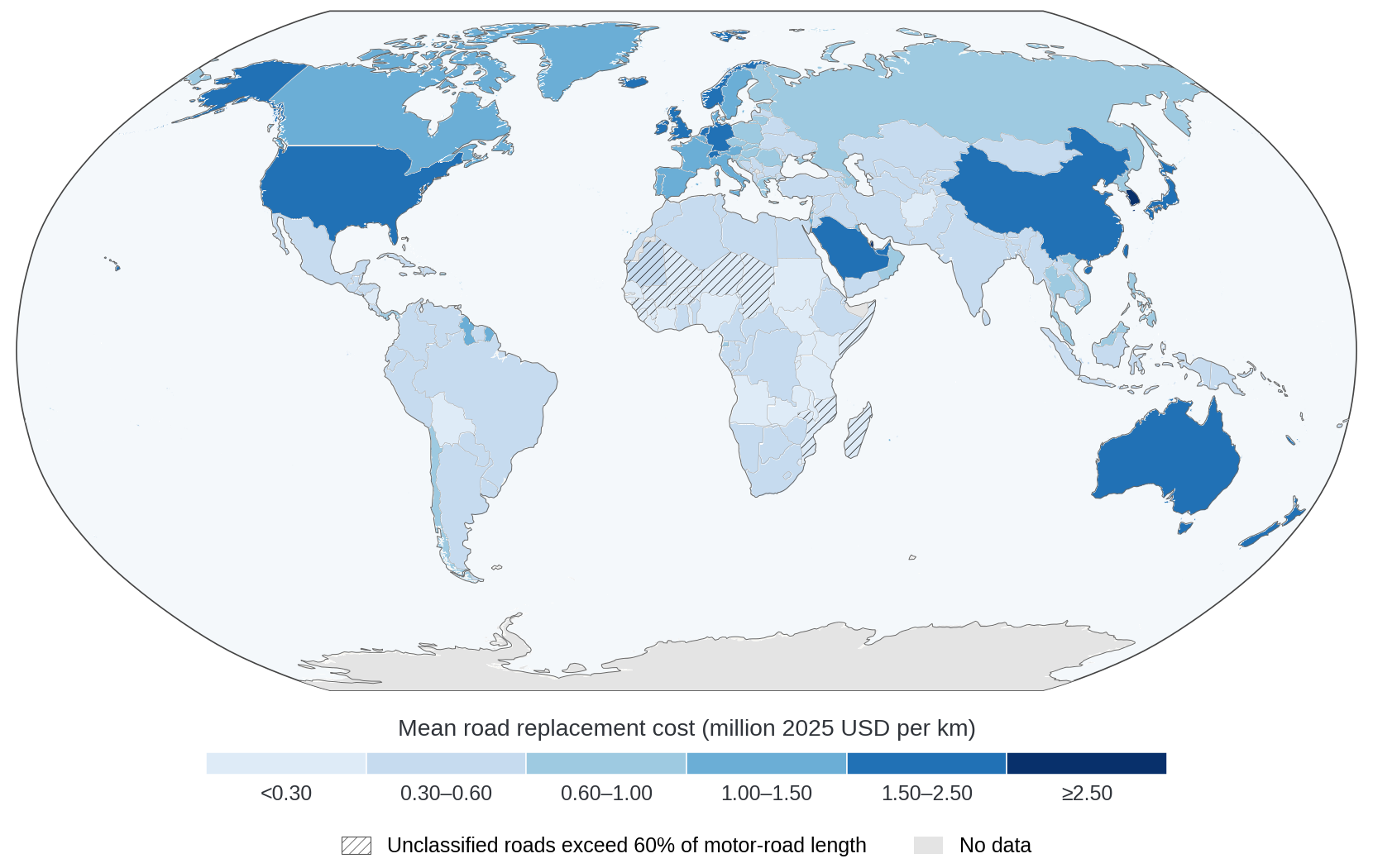
I investigate how tropical cyclone hazards affect urban lifeline infrastructure and the people who depend on it, focusing on transportation and healthcare. I combine hazard simulations with infrastructure, population, and mobility data to assess physical damage, network performance, and access to essential services under changing climate conditions.
Global roads and synthetic cyclone activity
Road replacement costs
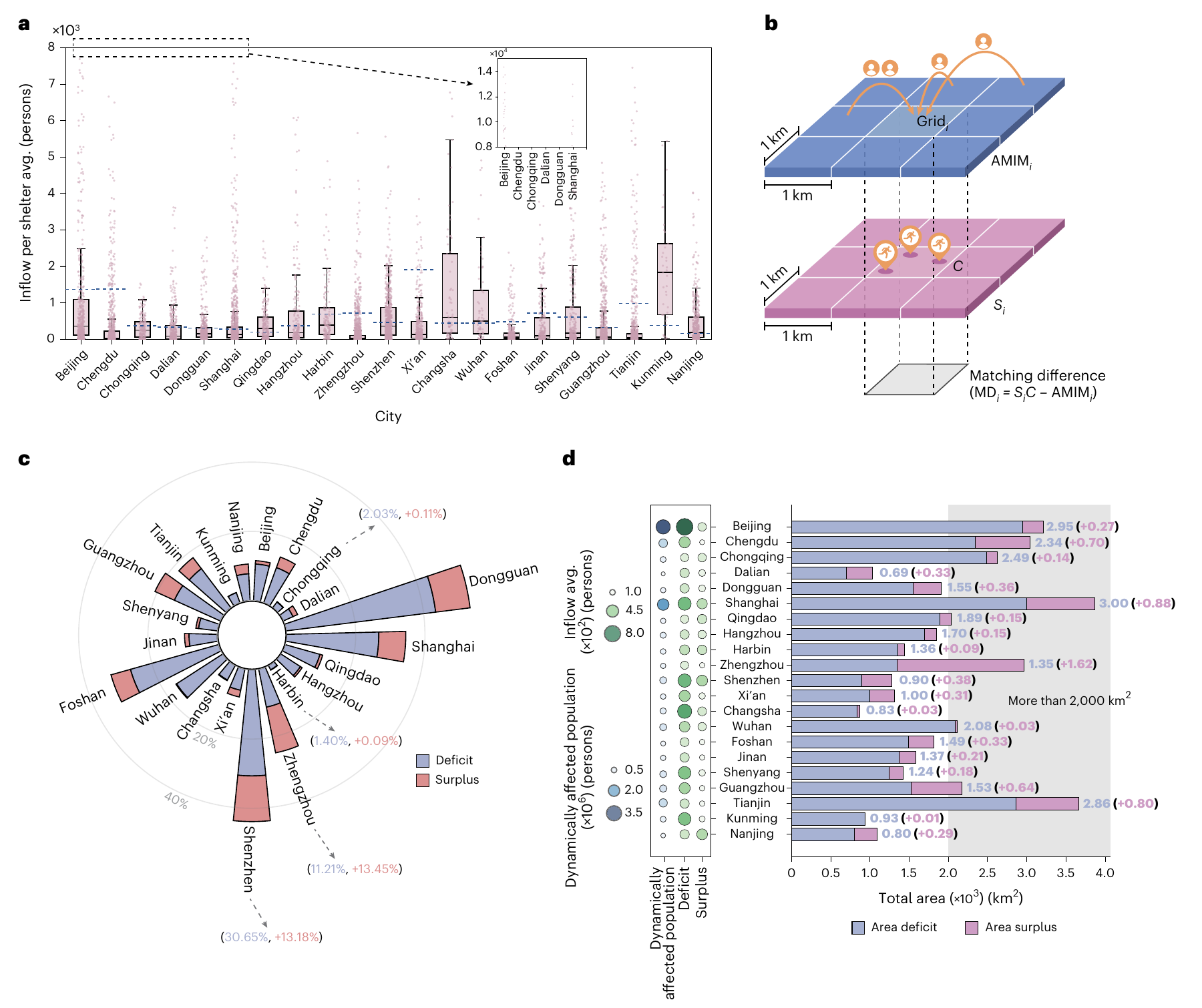
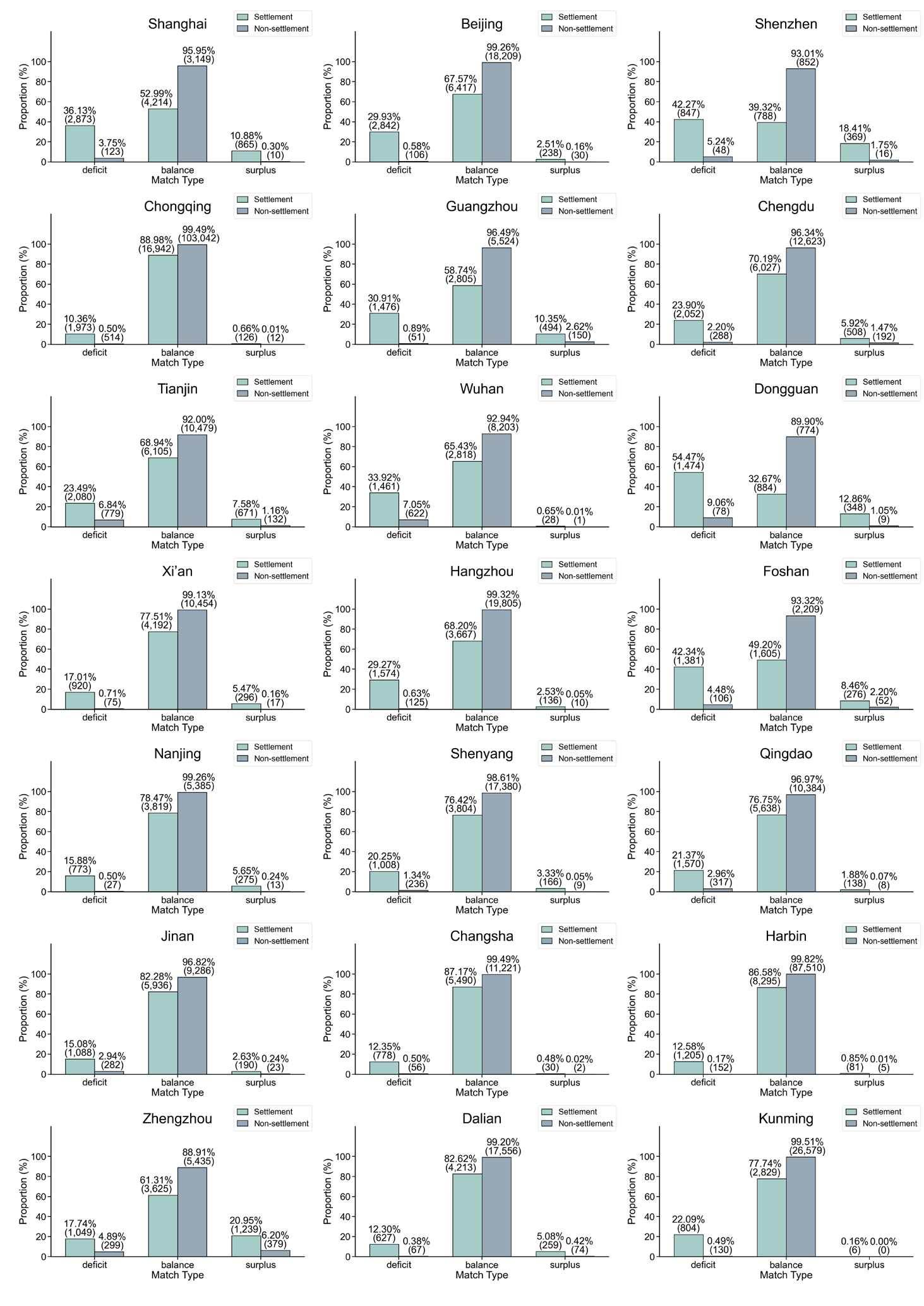
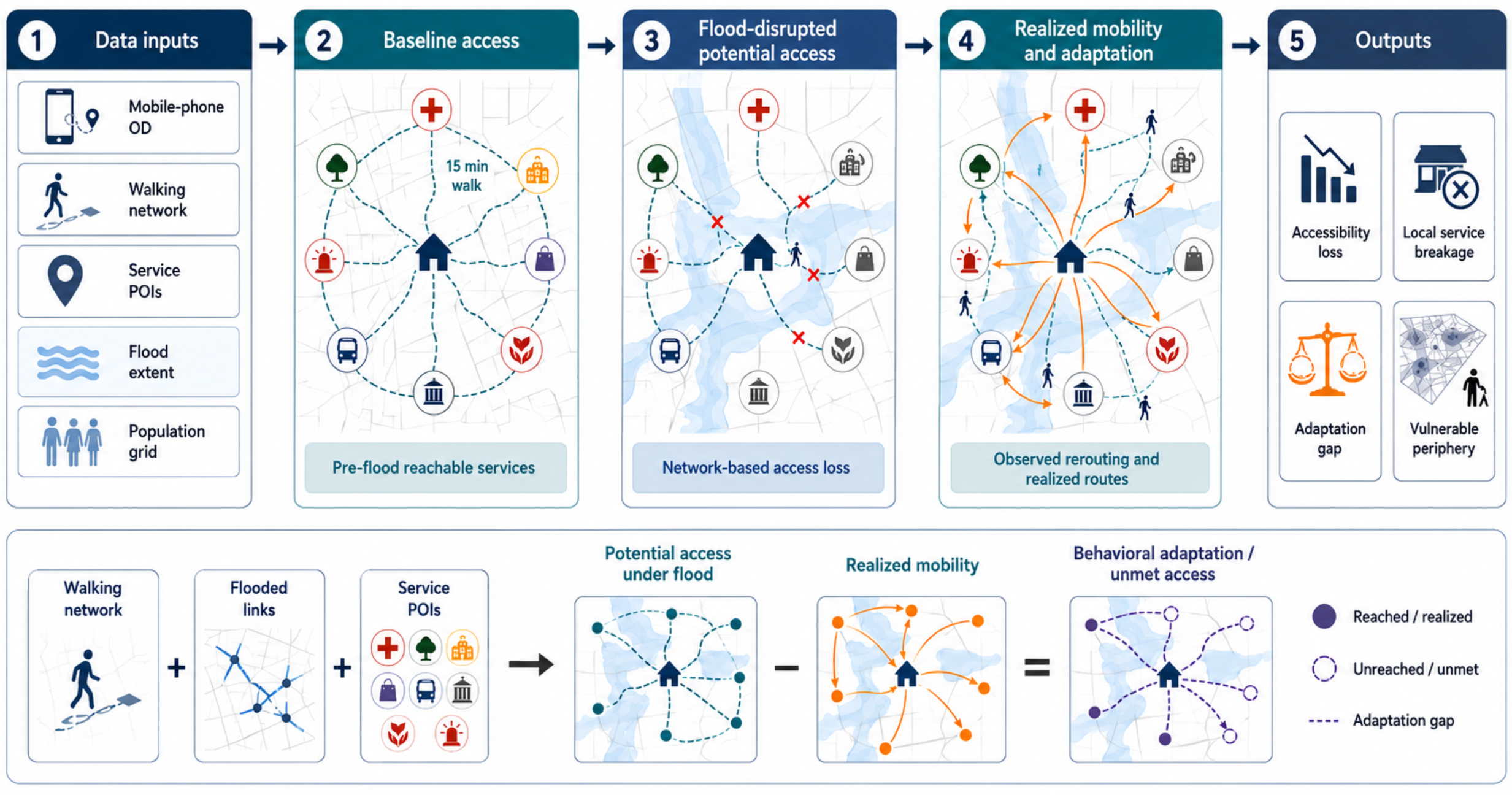
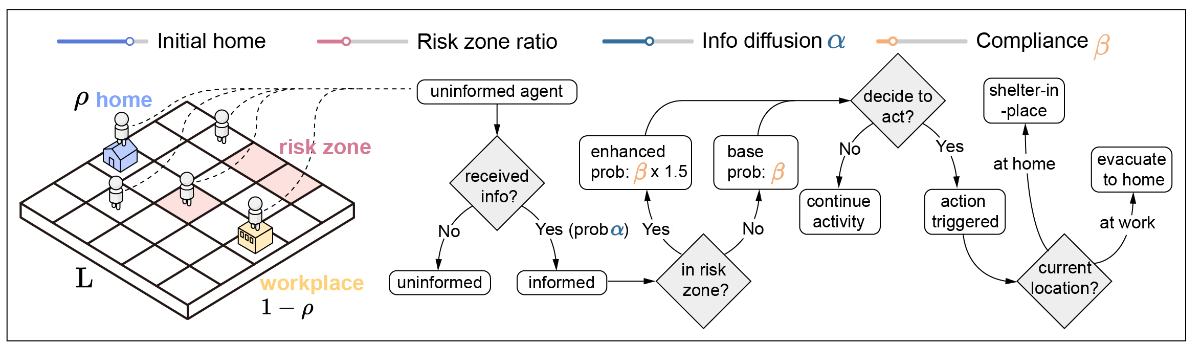
I study how the spatial distribution of emergency resources and everyday services interacts with human mobility and adaptive responses during floods. Combining accessibility analysis, aggregated mobility data, and agent-based modeling, I examine how resource allocation, service access, and warning information shape urban preparedness and adaptation.
Emergency-resource demand and supply
Deficits, balance and surpluses across 21 cities
How flood disruption changes 15-minute access
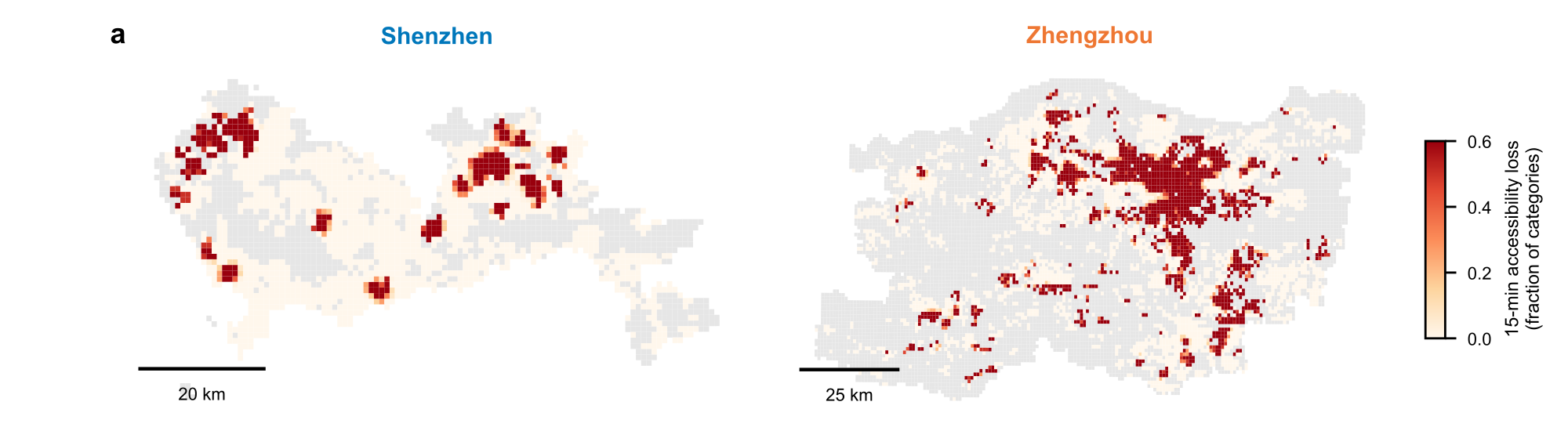
15-minute accessibility losses in Shenzhen and Zhengzhou
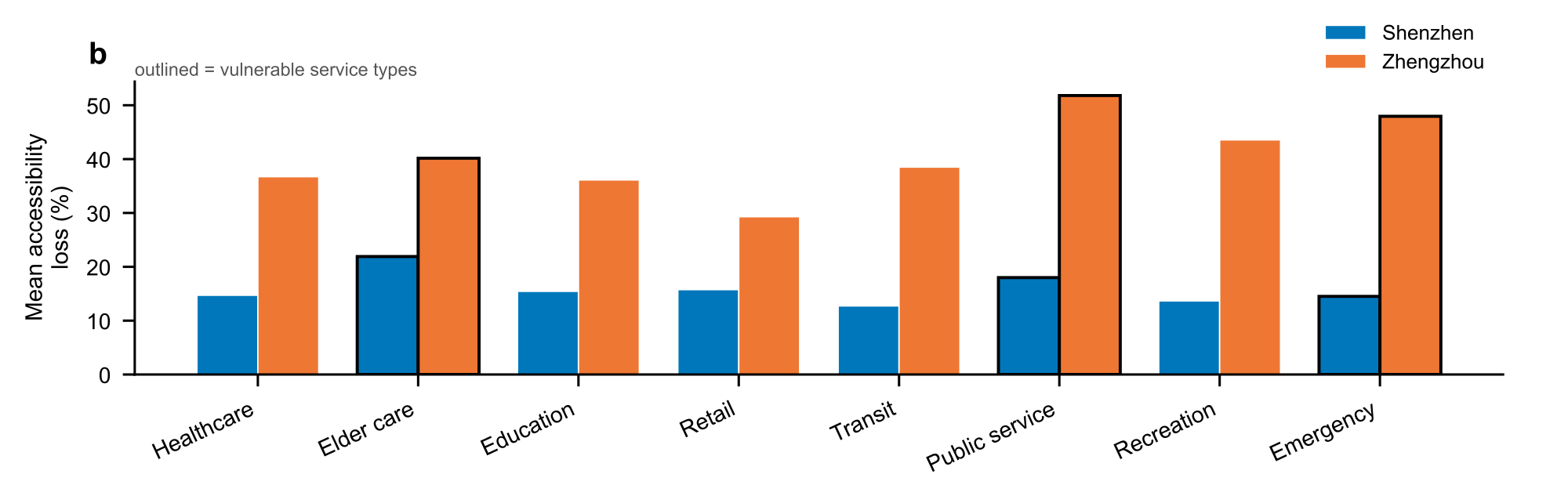
Accessibility losses across everyday services
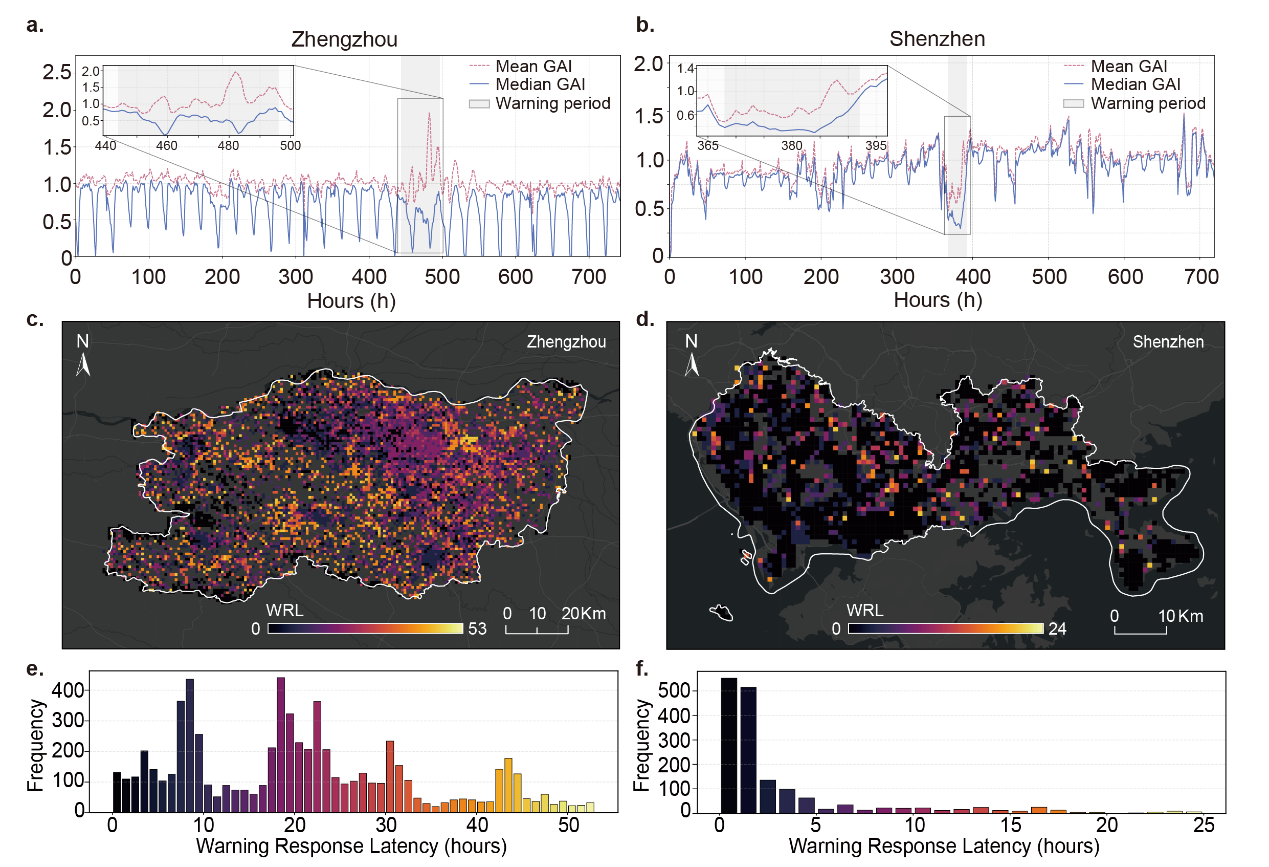
Human mobility and warning-response latency
Modeling information diffusion and adaptive responses
National Scholarship for Graduate Students, Ministry of Education of China
2026
Pacemaker to Merit Student, Peking University
2026
First Prize, 10th Chengyuan Cup Planning Decision Support Model Design Competition
2026
Second Prize, Peking University Academic Science & Technology Competition
2025, 2026
Third Prize, Esri Cup China University GIS Software Development Contest
2025
National Second Prize, Undergraduate Innovation & Entrepreneurship Training Program
2024
Outstanding Undergraduate Thesis, Nankai University
2024
Outstanding Graduate, Nankai University
2024
Huadan Scholarship in Political Science, Nankai University
2024
First-Class Scholarship, Nankai University
2021, 2023
Tianjin Municipal Government Scholarship
2022
Oral Presentation: “The Geographic Connotation of Resilient-City Research: An Exploration of Disaster-Risk-Constrained Human–Earth Relationships”, 13th International Conference on Population Geographies · Nanjing, China · Jun 2026
Oral Presentation: “Human–Environment Relationships under Disaster-Risk Constraints: A Preliminary Theoretical Exploration of the Geographic Connotation of Resilient-City Research”, 2026 Spring Annual Meeting of the Geographical Society of China · Chongqing, China · Apr 2026
Committee Member, Sub-Society for Postgraduate Students, Geographical Society of China
2025 – Present
ProgrammingPython; R; Stata; MATLAB; SQL; JavaScript; HTML/CSS.
GIS & ModelingArcGIS; GeoScene Pro; QGIS; CLIMADA; GeNIe Modeler.
DevelopmentGit/GitHub; LaTeX.
LanguagesMandarin (native); English (fluent, IELTS 8.0).